
Table of Contents
- Why Premium Athletic Apparel Is Worth It: The Real Math
- Why Is Gym Wear So Expensive? What You're Actually Paying For
- Premium vs. Budget Workout Clothes: What Changes on Your Body
- Cost Per Wear Activewear: The Number That Actually Matters
- How to Choose Workout Clothes That Hold Up Under Intensity
- What the Evidence Says About Performance and Injury Claims
- Caring for Premium Gear So It Lasts
- Conclusion: When Premium Athletic Apparel Earns Its Place in Your Rotation
- Frequently Asked Questions
Last Updated: October 5, 2026
Why Premium Athletic Apparel Is Worth It: The Real Math
Premium athletic apparel is worth it when its cost per wear drops below that of the cheap alternatives you keep replacing. That single calculation, not the price tag, decides whether expensive gym clothing pays for itself.
The pitch for high-quality activewear is usually emotional: confidence, motivation, looking the part. The better argument is arithmetic. A garment worn three times a week for two years costs a fraction per session of one that pills, sags, and gets retired after a season.
Why Is Gym Wear So Expensive? What You're Actually Paying For
Gym wear is expensive because technical fabric, precise construction, and small production runs cost real money. A training shirt is not a t-shirt with a logo; it is a piece of equipment engineered to manage sweat, stretch, and abrasion.
Technical Fabric and Construction Quality
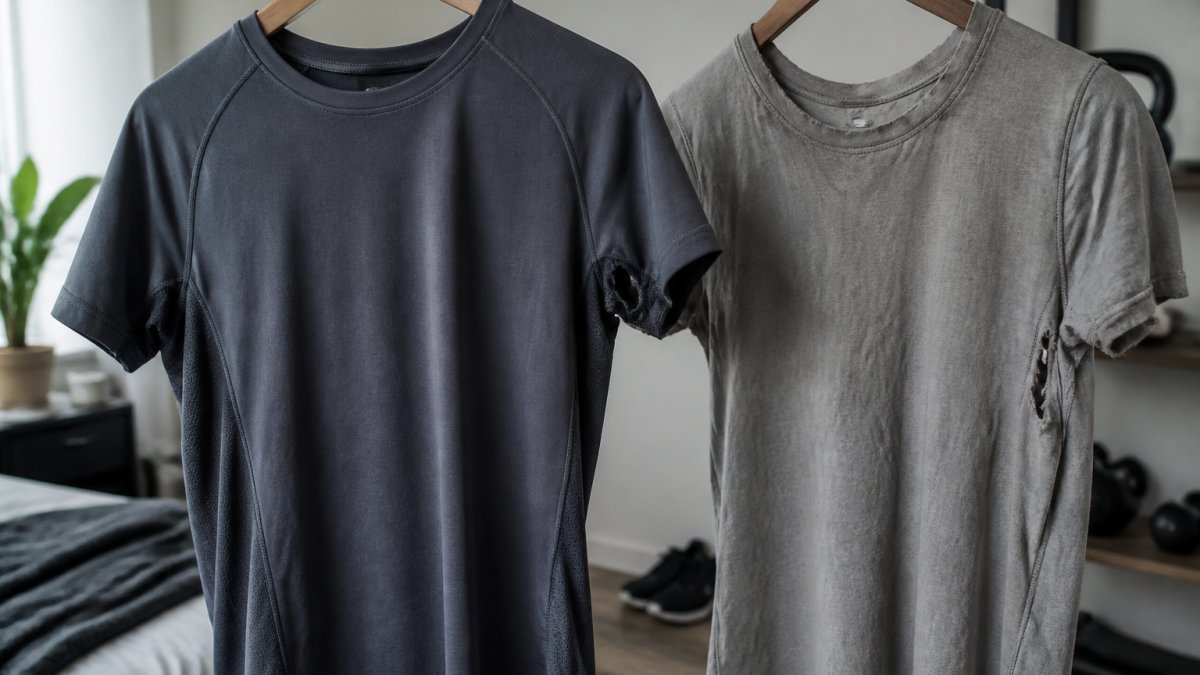
Technical fabric is knit or woven material engineered for a specific job: moving moisture, stretching in one direction and holding shape in another, or resisting odor. Premium pieces typically use denser knits, flatlock seams that sit flat against the skin, and gusseted panels at high-stress points. Those choices cost more to produce, and they are the difference between a garment that survives a training block and one that does not.
Where Budget Activewear Cuts Corners
Budget activewear cuts corners in ways you feel after a few washes. Common shortcuts include:
- Thinner knits that turn transparent when stretched
- Standard overlock seams that rub under a barbell or a pack strap
- Elastic waistbands that lose recovery within months
Premium vs. Budget Workout Clothes: What Changes on Your Body
Premium versus budget workout clothes comes down to four physical differences: moisture handling, stretch recovery, seam behavior, and fit consistency. You notice all four during intense exercise, not during a warm-up.
Moisture-wicking fabric moves sweat to the surface where it evaporates, which keeps you cool and dry instead of clammy. Breathable fabric allows temperature regulation during hard efforts.
The less obvious difference is chafing. A flat, well-finished seam does not grind against skin over a long session. A bulky one does.
Cheap gear also fails at the fit level. Inconsistent sizing between batches forces you to re-learn what fits, while a stable premium line lets you reorder the same size with confidence.
Cost Per Wear Activewear: The Number That Actually Matters
Cost per wear activewear is total purchase price divided by the number of times you actually wear the garment. The formula is simple, and it settles most arguments about price.
The Formula, Written Out
Cost per wear = purchase price ÷ total wears before the garment is retired.
Total wears = wears per week × weeks in service.
That second number is the one people get wrong. They estimate lifespan from the calendar, not from how the fabric actually degrades. A better approach is to track the failure mode. Garments rarely die all at once; they fail in one of four ways:
- Elastane fatigue, the stretch stops recovering, so the waistband sags or the knees bag out
- Pilling and surface wear, the knit abrades and looks tired even if it still functions
- Seam failure, stitching pulls, flatlocks unravel, or a gusset separates
Each failure mode has a different clock. A denser knit with a higher elastane content and flatlock seams tends to push all four clocks out. A thin budget knit tends to hit pilling and odor retention first, often within a single season of regular training.
A Worked Example You Can Copy
Say you train four times a week and rotate three shirts. Each shirt gets roughly 1.3 wears per week. Over a year that is about 70 wears per shirt.
- A budget shirt that lasts one season (call it 70 wears) has a cost per wear equal to its price divided by 70.
- A premium shirt that lasts three years (about 210 wears) has a cost per wear equal to its price divided by 210.
If the premium shirt costs three times as much but lasts three times as long, the cost per wear is identical, and you avoided two re-purchases, two shipping waits, and two rounds of re-learning your size.
The Costs That Do Not Appear on the Tag
Price is the visible cost. Three others matter just as much:
- Replacement friction, every re-buy costs time, shipping, and the risk that the new batch fits differently.
- Fit risk, inconsistent sizing between budget batches means a shirt that fit last year may not fit this year, which quietly raises your effective cost per wear.
- Performance drag, a shirt that holds sweat, chafes, or restricts movement makes a session worse. That is a real cost even if it never appears on a receipt.
Where the Math Breaks Down
Cost per wear is a tool, not a verdict. It assumes you actually wear the garment. A premium piece you save for special occasions has an infinite cost per wear because the denominator never grows. It also assumes the premium garment genuinely lasts longer, which is a claim you should verify by inspecting fabric recovery and seam construction, not by trusting the price.
How to Choose Workout Clothes That Hold Up Under Intensity
Choosing workout clothes that hold up starts with matching the garment to the activity, then checking fabric and construction in that order. Style is the last filter, not the first.
Athleisure pieces are built for low-intensity wear and daily rotation. Training and gym clothing for heavy lifting need denser knits, reinforced seams, and a cut that does not bind at the shoulder or hip.
A Practical Buying Checklist
- Stretch the fabric across the chest or thigh and check it returns to shape
- Turn the garment inside out and inspect seam type and finishing
- Check for a gusset or reinforced panel at high-stress points
Order one piece first, train in it hard for a week, then buy the rest of the rotation. Fit and seam behavior only show up under load, and a single test garment saves you from a bad multi-item order.
What the Evidence Says About Performance and Injury Claims
Claims that clothing improves performance or prevents injury deserve scrutiny, and the honest version of this section separates three tiers: benefits with solid mechanistic support, benefits with mixed or modest evidence, and claims that are essentially marketing.
Tier 1: Well-Supported Mechanisms
These are not controversial. The mechanism is understood and the effect is real, even if the size of the effect varies by person and conditions.
- Moisture management. Moving sweat off the skin and letting it evaporate supports thermoregulation during exercise. This is the core function of technical fabrics and the reason cotton is a poor choice for sustained training.
- Chafing reduction. Flat seams, gussets, and smooth finishes reduce friction at high-contact points. For anyone training long or repeatedly, this is the difference between finishing a week and losing days to raw skin.
- Freedom of movement. Four-way stretch and well-placed panels let joints move through full range without the fabric binding. This is a comfort and mechanics benefit, not a performance drug.
Tier 2: Mixed or Modest Evidence
These claims are plausible and sometimes supported, but the effect is smaller or more conditional than marketing suggests.
- Compression for recovery. Some athletes report less soreness and faster perceived recovery from compression garments (pubmed.ncbi.nlm.nih.gov). The evidence is mixed, and effects tend to be modest. Treat compression as support and comfort, not as a recovery intervention.
- Compression for performance. Any benefit is likely small and sport-specific. It will not replace training.
- Temperature regulation via fabric choice. Breathability helps, but ambient conditions, effort level, and hydration matter far more than the shirt.
Tier 3: Claims to Treat as Marketing
- "Prevents injury." Fabric cannot fix faulty mechanics, load management errors, or strength deficits. Appropriate clothing removes friction from training; it does not prevent injury.
- "Boosts strength" or "adds power." No garment adds force output. If a claim implies otherwise, it is overselling.
- "Medical-grade" or "therapeutic." Unless a product is regulated as a medical device, this language is marketing. See a qualified professional for pain or injury concerns.
How to Read a Performance Claim
When you see a claim on a product page, ask three questions:
- What is the mechanism? If the brand cannot explain how the fabric does what it claims, the claim is weak.
- Is the effect about comfort or about output? Comfort claims are usually honest. Output claims usually are not.
- Who benefits and under what conditions? A benefit that only appears in extreme heat, or only over multi-hour efforts, is real but narrow.
The honest position is this: appropriate sporting clothing removes friction from training. It keeps you dry, reduces chafing, and lets you move without restriction. That supports consistency, and consistency drives results. Everything beyond that should be evaluated on its own evidence, not on the price of the garment.
Do not let a fabric claim substitute for medical advice. If you have pain, a suspected injury, or a circulation concern, see a qualified professional. No shirt is a treatment.
Caring for Premium Gear So It Lasts
Premium gear lasts when you wash it the way performance fabrics require. Heat and fabric softener are the two biggest enemies of technical materials.
- Wash in cold water on a gentle cycle
- Skip fabric softener and dryer sheets, which coat fibers and block wicking
- Turn garments inside out to protect prints and seams
Durability is a two-way street. A well-made garment with construction quality in its seams and fabric quality in its knit will hold up, but only if you avoid the wash habits that break down elastane and wicking finishes.
Conclusion: When Premium Athletic Apparel Earns Its Place in Your Rotation
The challenge with premium gear is that the payoff arrives over months, while the price arrives today. If you train consistently, the cost-per-wear math favors fewer, better pieces that survive the work instead of a drawer of replacements that do not.
At Krush Khaos, we build apparel for athletes, dreamers, and underdogs who treat training as part of a larger fight.
Frequently Asked Questions
Why is gym wear so expensive?
The price reflects fabric, construction, and testing. Technical fabric that wicks moisture and regulates temperature costs more than basic cotton blends. Flatlock seams, gusseted panels, and reinforced stitching add labor. Brands also pay for fit testing across body types. Budget options cut these steps to hit a lower price, which is why they often pill, lose shape, or chafe after a few months of intense training.
Does expensive workout clothing last longer?
Often, yes, but it depends on construction more than price tag. Look for flatlock seams, four-way stretch fabric, and reinforced stress points. A garment that survives 100 washes without pilling or losing elasticity spreads its cost across far more workouts. That is the core of cost per wear activewear: divide price by the number of times you actually wear it. Cheap gear that fails in three months can cost more per session than premium gear that lasts two years.
Is premium activewear worth it for everyday workouts?
It depends on intensity and frequency. If you train three or more times a week, sweat heavily, or do high-friction activities like running or lifting, premium fabric pays off in comfort and durability. For occasional light exercise, a mid-range option may be enough. The decision comes down to how often you wear it and what you need it to do. Premium athletic apparel earns its cost when you use it consistently.
What should I look for when buying high-quality workout clothes?
Check four things: fabric composition (look for moisture-wicking blends with stretch), seam type (flatlock seams reduce chafing), fit (snug but not restrictive, with room to move), and return policy (so you can test fit risk-free). Also check care instructions. Garments that require special washing may not suit a heavy training schedule. A practical buying checklist beats brand loyalty every time.