
Table of Contents
- What Actually Drives the Price of Expensive Athletic Clothing
- Performance Benefits vs. Casual Wear: What the Price Buys You
- Cost-Per-Wear: The Math That Decides If It's Worth It
- What to Look for in Gym Leggings Before You Spend More
- Best Nike Alternatives for Gym Gear That Match Premium Performance
- How to Care for Athletic Apparel So It Lasts
- Frequently Asked Questions
Last Updated: October 2, 2026
What Actually Drives the Price of Expensive Athletic Clothing
Walk into any sporting goods store and you'll see two pairs of black leggings: one for $25, one for $110. The tag doesn't explain the gap. Fabric does.
Expensive athletic clothing costs more because of what's woven into it. Performance apparel relies on synthetic blends engineered for specific jobs: nylon for durability, spandex for stretch, polyester for moisture-wicking speed. The Textile Exchange materials overview explains how fiber choice, yarn construction, and finishing treatments all affect how a garment performs and how long it survives.
Cheap activewear cuts corners on all three. That's the honest answer to whether expensive athletic clothing is worth it: sometimes yes, sometimes you're paying for a logo.
Fabric technology and synthetic blends
Fabric technology is the engineering behind how a textile moves sweat, stretches, and holds its shape. Four-way stretch lets fabric flex in every direction, which matters for squats, lunges, and sprint work. Anti-microbial treatments slow odor buildup between washes. Thermal regulation keeps body temperature steadier during high-intensity interval training.
The difference shows up fast. A cotton t-shirt soaks through and stays heavy. A synthetic blend wicks moisture to the surface, where it evaporates. That's the entire point of technical gear.
You can read most of the story off the care tag. A typical premium legging runs roughly 75-85% nylon and 15-25% spandex; a budget pair often flips toward polyester with a thinner spandex share. Nylon resists abrasion and holds dye better; polyester dries faster but pills more readily under friction. Spandex percentage is the stretch-recovery dial, under about 12% and the fabric sags at the knees and seat after a few months of regular wear.
Fabric weight matters too. Knit weight is measured in grams per square meter (GSM). Lightweight knits (roughly 150-200 GSM) feel cool but go sheer under tension. Mid-weight (around 220-260 GSM) is the sweet spot for squat-proof leggings and training tops. Heavyweight (280 GSM and up) resists pilling and holds shape but traps more heat. A tag that lists composition but not weight tells you half the story, squeeze the fabric and hold it to a light to judge the rest.
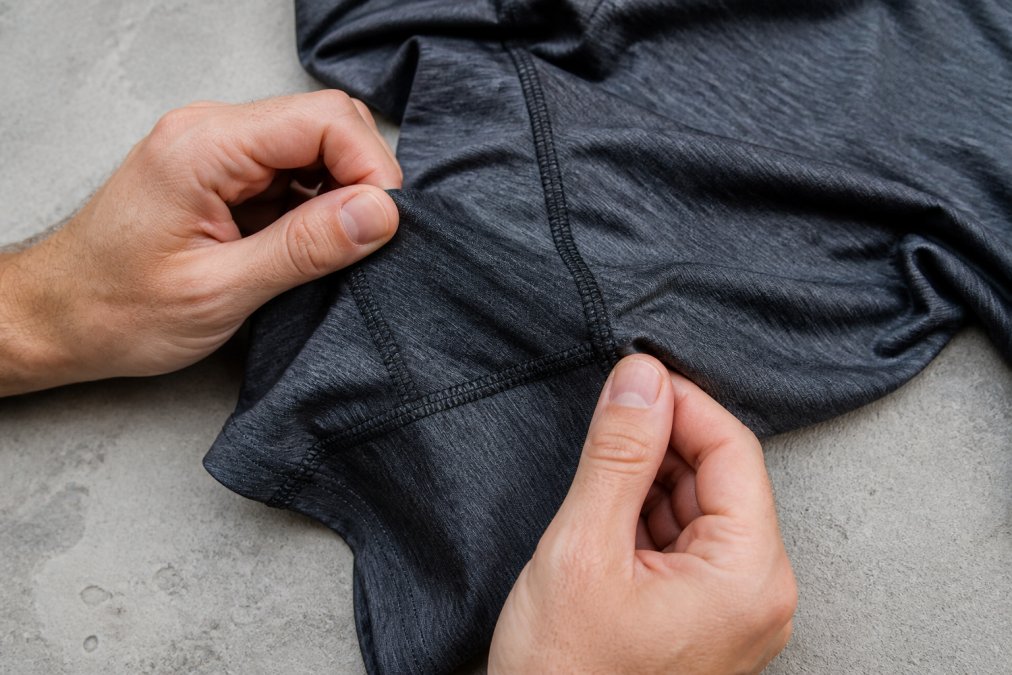
Seam construction and ergonomic design
Flatlock stitching lays seams flat against the skin instead of bunching them up. On a long run, that's the difference between a smooth fit and raw, chafed skin under your arm.
Ergonomic design goes further: gusseted crotches, articulated knees, and paneled construction that follows how a body actually moves. Cheap gear skips these details. You feel it by mile three.
Performance Benefits vs. Casual Wear: What the Price Buys You
Performance athletic clothing delivers measurable advantages over casual cotton: better moisture management, less chafing, and greater range of motion. Whether those advantages matter depends entirely on workout intensity.
For a walk around the block, a $15 cotton tee is fine. For high-intensity interval training five days a week, it isn't. Cotton holds sweat against your skin, which raises body temperature and causes friction. Synthetic blends pull moisture away and dry quickly.
Compression and support play a role too. Well-designed compression gear can reduce muscle oscillation during explosive movement, which many athletes report feels more stable.
Cost-Per-Wear: The Math That Decides If It's Worth It
Cost-per-wear is the purchase price divided by the number of times you actually wear the item. It's the single most useful number in this entire debate.
Here's the framework:
| Scenario | Price | Wears Before Failure | Cost-Per-Wear |
|---|---|---|---|
| Budget leggings | $25 | 20 washes | $1.25 |
| Mid-tier leggings | $60 | 80 washes | $0.75 |
| Premium leggings | $110 | 200 washes | $0.55 |
The premium pair costs more upfront but less per workout, if it genuinely lasts. The catch: "if." A $110 pair that pills after 30 washes is worse value than the $25 pair.
What to Look for in Gym Leggings Before You Spend More
Squat-proof fabric, flatlock seams, and a waistband that doesn't roll are the three non-negotiables in gym leggings. Everything else is preference.
Run through this checklist before checkout:
- Opacity test: Bend, squat, and stretch in bright light. Can you see through the fabric?
- Seam check: Are seams flatlock-stitched or raised and bulky?
- Waistband: Does it stay put during movement, or does it roll down?
- Fabric weight: Heavier knits resist pilling and hold shape longer
- Stretch recovery: Does the fabric snap back, or stay stretched out?
- Care requirements: Machine washable beats hand wash for real-world use
A common mistake is buying for looks first. A gorgeous pair that fails the opacity test will sit in your drawer.
Best Nike Alternatives for Gym Gear That Match Premium Performance
Plenty of brands now match premium performance without the premium markup. The best Nike alternatives for gym gear focus on fabric technology and construction rather than celebrity marketing budgets.
Krush Khaos is built for exactly this crowd: athletes, underdogs, and anyone who treats training as a mindset, not a hobby. The brand's apparel is designed for people who embrace the chaos of hard training and want gear that reflects that determination.
When evaluating any alternative brand, compare on the same criteria: fabric technology, seam construction, durability, and cost-per-wear. Skip the logo premium and put that money into construction instead.
How to Care for Athletic Apparel So It Lasts
Washing athletic apparel correctly can double its usable life. Most premature failures come from heat and fabric softener, not from training.
Here's the mechanism behind each rule, because knowing why makes you follow it:
- Cold water only. Spandex is a polyurethane elastomer. Heat above roughly 140°F accelerates hydrolysis of the polymer chains, which is why elastic waistbands go slack and leggings lose snap-back. Cold water slows that breakdown.
- Skip fabric softener and dryer sheets. Softener molecules are designed to coat fibers with a waxy film. On cotton that feels plush; on a technical knit it blocks the capillary channels that pull sweat to the surface, so the garment stops wicking and starts holding odor.
- Turn garments inside out. Pilling happens where fabric rubs against fabric. Flipping the garment puts the abrasion on the interior face and protects the outer surface that everyone sees.
- Air dry when possible. Tumble heat is the single fastest way to kill stretch. If you must use a dryer, choose the lowest heat setting and pull items out slightly damp.
- Wash with similar fabrics. Zippers, Velcro, and hook-and-loop closures snag delicate knits. A single Velcro strap in a mixed load can pill an entire training top.
- Use mesh laundry bags. They limit stretching and snags in the wash cycle, especially for sports bras and thin leggings.
- Wash less often. Technical fabrics are engineered to resist odor between wears. Unless the garment is visibly soiled or heavily sweat-soaked, airing it out overnight often restores it for another session, which directly lowers your cost-per-wear.
The American Cleaning Institute fabric care guidance notes that following care labels is the most reliable way to preserve garment longevity. Ignore the label and you're gambling with your investment.
So: is expensive athletic clothing worth it? When the fabric, seams, and construction justify the price, yes. When you're paying for a logo, no. Learn to tell the difference, and every purchase gets smarter.
Frequently Asked Questions
Do premium gym clothes actually last longer than budget alternatives?
They often do, but it depends on construction and care. Higher-priced athletic clothing typically uses flatlock stitching, four-way stretch fabrics, and anti-microbial treatments that resist pilling and odor. Budget pieces may use basic seams that fray faster. The key is cost-per-wear: a $90 legging worn 100 times costs $0.90 per wear, while a $25 pair that loses shape after 15 washes costs $1.67 per wear. Durability only pays off if you train consistently.
What should I look for in gym leggings to know if they're worth the price?
Check four things: fabric composition (nylon-spandex blends with at least 20% spandex hold shape better), seam type (flatlock stitching prevents chafing), opacity (squat-test the fabric in bright light), and waistband construction (wide, flat waistbands stay put during high-intensity interval training). If a legging checks all four boxes, the price is easier to justify because you won't need to replace it every few months.
Are there affordable alternatives that offer similar performance to luxury brands?
Yes. Several smaller brands make performance apparel with the same technical fabrics and construction as the big names, often at lower price points because they skip celebrity endorsements and massive ad budgets. Look for brands that publish fabric specs, offer satisfaction guarantees, and have a track record of repeat customers. The best Nike alternatives for gym gear focus on moisture-wicking, compression, and durability rather than logo recognition.
How do I care for athletic apparel so it actually lasts?
Wash in cold water on a gentle cycle, turn garments inside out, and skip fabric softener because it clogs moisture-wicking fibers. Air dry when possible; if you use a dryer, keep it on low heat. Avoid washing with heavy items like jeans that cause abrasion. Following these steps can extend garment longevity significantly, which directly improves your cost-per-wear and makes the initial investment more worthwhile.
The real challenge isn't finding gear that looks good. It's finding apparel that holds up through months of hard training and still reminds you why you started. Krush Khaos builds apparel around a mindset, not just a look, for athletes and underdogs who refuse to be defined by setbacks. If you want gear that matches your work ethic, explore the Krush Khaos collection and wear your dedication.