
Table of Contents
- Why Mindset Matters for Athletic Performance: The 90% Factor
- Sports Psychology Techniques for Athletes That Actually Work
- Mental Preparation for Athletes: A Step-by-Step Routine
- Growth Mindset in Sports: Turning Mistakes Into Data
- Focus Techniques for Athletes: Managing Stress, Arousal, and Overthinking
- Mental Skills for Setbacks, Injury, and Recovery
- Measuring Mental Skills and Performance Outcomes
- Conclusion: Train Your Mind Like You Train Your Body
- Frequently Asked Questions
Last Updated: October 7, 2026
Why Mindset Matters for Athletic Performance: The 90% Factor
Ask any coach what separates two athletes with identical physical gifts, and you'll hear the same answer: mindset matters. Sport psychology research has long suggested that mental factors drive a huge share of performance outcomes, and the athletes who train their minds as hard as their bodies tend to pull ahead when it counts.
The research on this is consistent: performance is not just a physical equation. Focus, confidence, and emotional control shape how an athlete executes under pressure. That is the core argument of this guide from Krush Khaos, and it runs through every section below.
Mindset is the collection of thoughts, beliefs, and attitudes an athlete brings to training and competition. It shapes how you interpret pressure, respond to mistakes, and sustain effort when your body wants to quit. Below, we'll break down the mental skills that actually move performance, plus a step-by-step routine you can start using this week.
Sports Psychology Techniques for Athletes That Actually Work
The techniques that work best are the ones you'll repeat. Three stand out because they are simple, fast, and have been studied in real competition settings:
- Visualization (mental rehearsal): Rehearse your performance in your head before it happens.
- Self-talk: Replace "I can't" with a short, direct cue like "next rep."
- Breath control: Use slow breathing to lower your heart rate before big moments.
Most guides list a dozen techniques. That's the problem. A short list you actually practice beats a long one you read once.
How Each Technique Actually Works
Visualization. When you mentally rehearse a movement, your brain activates many of the same motor and sensory pathways it uses when you actually perform it. That's why imagery is not daydreaming, it's a rehearsal. The key is first-person perspective and detail: see the court, feel your grip, hear the crowd. A common pattern among sport psychologists is to pair imagery with the physical skill so the two reinforce each other.
Self-talk. The words you use shift attention and arousal. Short, instructional cues ("elbow up," "drive through") tend to help precision skills, while motivational cues ("go," "attack") tend to help effort-based tasks. Keep cues to one or two words so they don't compete with the task for attention.
Breath control. Slow, diaphragmatic breathing activates the parasympathetic nervous system, which lowers heart rate and can reduce the physical symptoms of over-arousal, tight hands, shallow chest breathing, racing thoughts. A simple pattern is a longer exhale than inhale, such as inhaling for a count of four and exhaling for a count of six.
Dosage: How Much and How Often
Mental training works like physical training. One session does nothing. A common starting point is 10 to 15 minutes a day, most days, with the same three techniques. Consistency matters more than duration. If you can only do five minutes, do five minutes every day rather than an hour once a week.
A Quick Evidence Note
Sport psychology organizations such as the Association for Applied Sport Psychology and the American Psychological Association publish resources on imagery, self-talk, and arousal regulation. If you want to go deeper, look for peer-reviewed reviews on "psychological skills training" rather than single studies, the body of evidence is stronger than any one paper.
Association for Applied Sport Psychology, psychological skills training resources
Mental Preparation for Athletes: A Step-by-Step Routine
A mental preparation routine is a fixed sequence of actions you run before every training session or competition. The goal is consistency: the same cues, the same timing, every time, so your body knows what's coming.
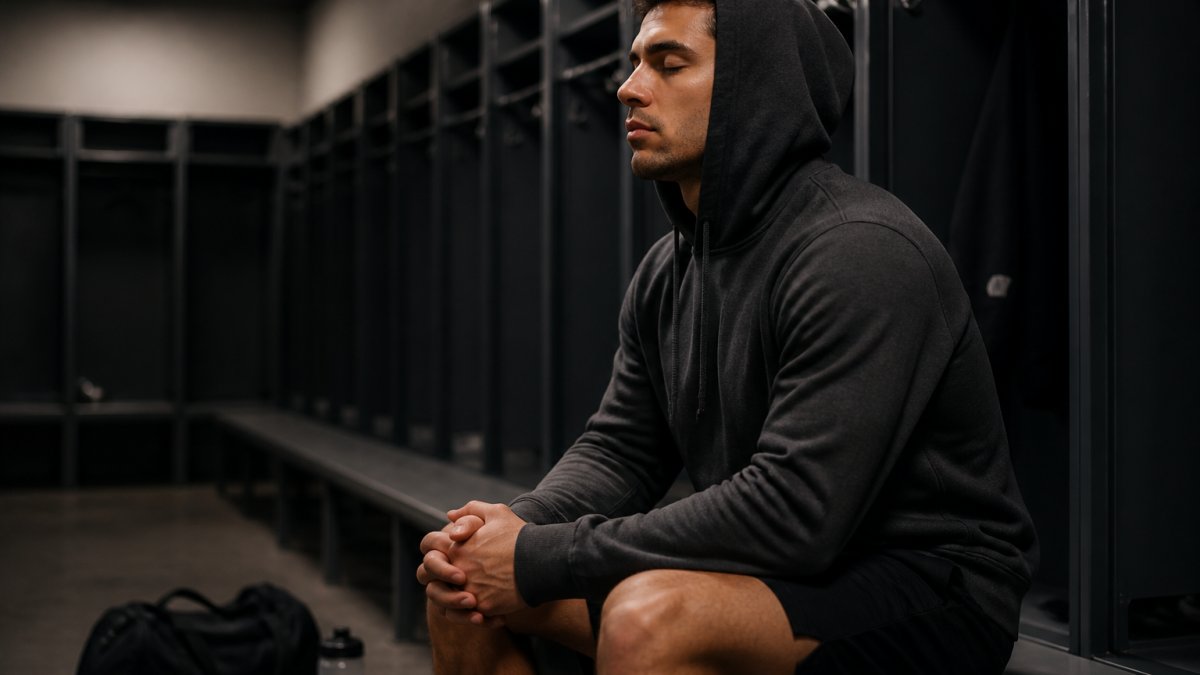
Here's a routine you can run in about 15 minutes:
- Settle (2 minutes): Sit quietly. Breathe slow and even.
- Review (3 minutes): Picture your first three actions in detail.
- Rehearse (5 minutes): Walk through the hardest moment you expect.
- Cue (2 minutes): Pick one word for the day. "Attack." "Calm." "Go."
- Commit (3 minutes): State your intention out loud.
Expected result: You walk into competition with a plan instead of a knot in your stomach.
Growth Mindset in Sports: Turning Mistakes Into Data
A growth mindset in sports is the belief that ability can be developed through effort and feedback. Mistakes stop being verdicts on your talent and start being information you can use.
That shift sounds small. It changes everything.
- Fixed mindset: "I missed that shot. I'm not a shooter."
- Growth mindset: "I missed that shot. My release was late. Fix the release."
The second athlete has something to work on. The first one just has a story about who they are.
A common mistake is treating a growth mindset as positive thinking. It isn't. It's honest thinking. You look at the mistake, name the cause, and adjust.
Discipline Outworks Talent Hoodie →
Focus Techniques for Athletes: Managing Stress, Arousal, and Overthinking
Focus techniques for athletes are methods for directing attention to what you control and letting go of what you don't. The biggest enemy isn't nerves. It's overthinking.
A little arousal helps. Too much and your hands tighten, your decisions slow down, and you start replaying old mistakes mid-game.
Try these:
- Anchor to your breath between plays, not during them.
- Pick a physical cue (tapping your shoes, gripping your gear) to reset.
- Name the thought ("That's the doubt again") and move on.
- Shrink the window: focus on the next rep, not the final score.
Mental Skills for Setbacks, Injury, and Recovery
Injury is where mindset gets tested hardest. The athletes who come back strongest treat recovery as training, not as waiting. That means setting daily physical goals inside your limits, keeping a routine, and staying connected to your team instead of vanishing from the gym.
The real difference between a setback that ends a season and one that builds a better athlete comes down to identity. If your whole self-image is "the player," an injury feels like losing yourself. If it's "the competitor," recovery is just the next event.
A Three-Phase Recovery Mindset Protocol
Most advice stops at "stay positive." A more useful approach breaks recovery into phases, each with its own mental task:
- Acute phase (first days to two weeks). The task is acceptance, not denial. Set one non-negotiable daily habit you can control, sleep schedule, nutrition, or a short mobility session. Control is the antidote to helplessness.
- Rehabilitation phase (weeks to months). The task is process focus. Track rehab like training: sets, reps, range of motion, pain score. Celebrate process milestones (a new degree of motion) rather than outcome milestones (return date), because return dates slip and process rarely does.
- Return-to-sport phase. The task is rebuilding trust in the body. Use graded exposure: practice the movements you fear at low intensity first, then build. Visualization of the healed movement, done daily, can reduce the hesitation that causes re-injury.
Measuring Recovery Progress
Use the same log you use for training, but swap the metrics:
| What to Track | How to Score It | What It Tells You |
|---|---|---|
| Rehab adherence | Yes/no each day | Whether routine is holding under frustration |
| Pain score | 0-10 before and after rehab | Whether load is appropriate |
| Confidence in the injured area | 1-10 weekly | Whether fear is fading |
| Identity check | "Athlete" vs "injured person" | Whether self-image is narrowing |
Plateaus and Bad Patches
Not every setback is an injury. Plateaus and mid-competition bad patches test the same skills. Endurance sports teach this well: long races are full of bad patches, and the athletes who finish are the ones who expect the patch and keep moving through it. The same is true of a mid-season slump. Name the patch, shrink the window to the next rep or the next mile, and let the routine carry you until the feeling passes.
Measuring Mental Skills and Performance Outcomes
You can't improve what you don't track. Mental skills are measurable, and the simplest tool is a short post-session log.
| What to Track | How to Score It | What It Tells You |
|---|---|---|
| Focus | 1-10 after each session | Whether attention holds under fatigue |
| Confidence | 1-10 before competition | Whether self-belief is trending up or down |
| Reset speed | Seconds to refocus after a mistake | Whether your cues are working |
| Routine consistency | Yes/no each day | Whether preparation is becoming a habit |
Keep it to under two minutes. Log it right after training. After a few weeks, patterns show up: your focus dips when you skip your routine, or your confidence climbs when you review film.
That's the part most athletes miss. Mental progress feels invisible until you write it down.
Conclusion: Train Your Mind Like You Train Your Body
The gap between athletes at the same physical level is almost always mental. Focus, confidence, and the ability to reset after mistakes are trainable skills, not fixed traits.
At Krush Khaos, we build gear for the athletes who train that gap every day. Our Discipline Outworks Talent Hoodie and Turn Doubt Into Fuel Tee are made for people who treat mindset as part of the workout, not an afterthought.


Frequently Asked Questions
How does mindset affect athletic performance?
Mindset shapes how athletes interpret pressure, mistakes, and fatigue. A neutral or positive mindset keeps arousal at useful levels, protects confidence after errors, and sustains focus through long competitions. When mindset matters most is in the moments between points, reps, or plays, where self-talk and intention determine whether an athlete resets or spirals. Sports psychology research consistently links mental skills like self-belief and emotional control to performance consistency, especially when physical talent between competitors is roughly equal.
What are the 4 C's of sports psychology?
The 4 C's are confidence, concentration, control, and commitment. Confidence is belief in your ability to execute. Concentration is the ability to hold focus on relevant cues. Control refers to managing emotions and arousal. Commitment is the motivation to keep training smarter over time. Together they form a practical checklist: if performance dips, ask which C broke down. Many athletes find control and concentration are the first to slip under pressure, and those are the easiest to rebuild with a daily routine.
How can athletes improve mental toughness?
Improve mental toughness by treating it as a skill, not a trait. Build a pre-performance routine that includes mental practice, breathwork, and a single process cue. Practice responding to mistakes with a physical reset (like adjusting your shoes) and a neutral phrase. Track one mental skill per week, such as staying present for a full quarter or inning. Over time, these small repetitions create the resilience that shows up when the score is tight.
Can a positive mindset improve sports performance?
A positive mindset helps, but a neutral mindset is often more sustainable. Optimism can fade when calls go against you. Neutral thinking, where you state facts without judgment ('that was wide, next ball'), keeps emotions steady and decisions clear. That said, positive self-belief does correlate with better performance outcomes, particularly in endurance sports where motivation and pain tolerance matter. The goal is not forced positivity but a mindset you can return to under pressure.
The hard part isn't learning these skills. It's repeating them on the days you don't feel like it. Krush Khaos exists for those days, with apparel designed to remind you that discipline outworks talent and doubt can be turned into fuel. Shop the collection and wear your mindset where everyone can see it.